The Greatest Show on Earth (well, almost)
POSTED ON 16/11/2009“Great show on Saturday. The crowd were really switched on and, as I said, I thought the pace of things was just right”.
“Just wanted to say what a fantastic tasting you organised on Saturday. It was really well organised and there was a fantastic atmosphere. The consumers who attended were really interested in wine and it was great to take them through some of the wines in our range”.
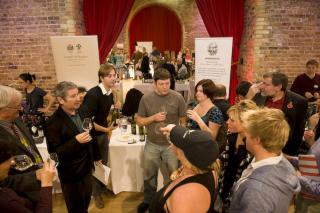 Wine walking at Vinopolis
Krug Clos d'Ambonnay 1996 on Guy Fawkes
POSTED ON 09/11/2009I’ll say that again: Krug Clos d’Ambonnay 1996. I think that Krug Clos d’Ambonnay is the most expensive individual bottle of champagne in the world, on release at least, so when I was invited to join Olivier Krug and a group of the specialist champagne press for lunch on Guy Fawkes in the Krug Room at The Dorchester for the launch of the second vintage of this super-cuvée, the 1996 Clos d’Ambonnay, you can probably guess how long it took me to work out if I could squeeze it into my, er, crowded schedule for the day.
An Open and Nutt Case
POSTED ON 02/11/2009Highly likely as it is that the current classification of drugs is arbitrary, it would be wrong if defending the ex-drugs tsar Professor David Nutt were to result in the demonization of alcohol per se. How easy it is to say that ‘alcohol is to blame for…etc. etc.’ without considering how it’s used and our own responsibilities. How easy to make alcohol the scapegoat for society’s ills. And how easy for a government to be seen to be doing something by introducing price controls on amounts and prices as if that were anywhere close to the root of the problem.
25 Years Auld - Alliance
POSTED ON 26/10/2009There was only one (wine) show in town last week and that was the party held at the Tate Modern by Alliance Wine to celebrate its 25th anniversary. You could be forgiven for wondering who on earth Alliance is because they’re not high profile wine merchants but a national distributor, one of those unsung heroes that rarely, if ever, get a press mention because they sit in the shadowlands between supplier and retailer. Yes, the wine trade and the press know who they are because some of them, like Richards Walford and Alliance themselves for instance, have a strong portfolio of suppliers.
Cape Escape
POSTED ON 19/10/2009Shortly before South Africa announced it was looking for a new coach to help its footballers side make a fist of things as World Cup host nation next summer, a group of singers crooned ‘happy birthday to you’ (South African wine was 350 years old) and offered cup cakes an champagne to the slightly bemused visitors to the mega Wines of South Africa tasting at Earls Court last week. The wines certainly seem to be doing a better job than the footballers.
The Tories crack down; the French go Naked.
POSTED ON 12/10/2009Following Tory Party chairman Eric Pickles’ lead in imposing a champagne ban at the Tory Party conference in Manchester, a Tory government will increase taxes on champagne and, in an effort to crack down on late-night licensing, bring in stringent new anti-crime measures members to stop Tory party members getting drunk on bubbly and stealing bottles of champagne.
Andrew Fairlie's 25 Years of Roux
POSTED ON 28/09/2009No blog last week, I’m afraid. My computer expired or rather the back light went, which meant a new computer and retrieving files and folders that hadn’t been backed up. A new machine was long overdue as the old one was playing havoc with my patience, always slow, constantly sticking and generally leading me a merry dance.
Queen Sarah and Her Night of the Round Table
POSTED ON 21/09/2009If you’re a woman who loves wine, you can only dream of hosting a dinner table with such living legends of wine as Anthony Barton, Michael Broadbent, Angelo Gaja, Baron Eric de Rothschild, Hugh Johnson, Serge Hochar and Nicolas Catena. The dream came true last week for Decanter Magazine’s publishing director Sarah Kemp, who surrounded herself with past Decanter Men of the Year at a posh dinner held in honour of Nicolás Catena.
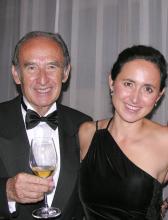 Nicolás and Laura Catena
Marche Forces
POSTED ON 14/09/2009I was in Le Marche last week on a trip organised by the knowledgeable Italian specialist Michèle Shah. BBC.co.uk/weather’s gloomy forecast had been for heavy showers Wednesday to Saturday, so I took my umbrella. Just as well because it was gloriously sunny and warm for most of the time, although it did rain for 5 minutes when I was in Serrapetrona, whose quirky red spumante, Vernaccia di Serrapetrona, was Le Marche’s first DOCG. Not that this small Adriatic region halfway down Italy’s eastern seaboard has a huge number of DOCGs.
The Wine List that Twittered
POSTED ON 30/08/2009Twit or twitterer? I succumbed to the twitterverse recently in a belated attempt to find out more about the social media phenomenon. So when asked if I’d like to attend a Twitter tasting at L’Anima, Peter Marano’s Italian restaurant tucked between Moorgate and Liverpool Street, I had my doubts. Not because of l’Anima but because I had no idea what a Twitter tasting was or what it was for.

